Exciting news! We're upgrading our booking engine to provide you with an even better online experience. During this upgrade, you might encounter temporary interruptions. For immediate assistance with your booking, please email us at reservations@oagaresorts.com
Our team is here to guide you and make your dream Maldives vacation a reality!
World's Lowest Nation: The Maldives is the world's lowest-lying country and has demonstrated its environmental commitment through pioneering actions like holding the world's first underwater cabinet meeting.
Unique Geography: The country is composed of 26 natural coral atolls and is famous for its diverse marine ecosystem (including manta rays) and rare bioluminescent beaches.
Cultural Roots: The national identity is rooted in its ancient heritage, reflected in its Sanskrit name, "Garland of Islands," and distinct traditional arts and a cuisine built on fresh fish and coconut.
Eco-Conscious Tourism: Tourism is closely tied to sustainable travel and offers unique cultural experiences, such as art workshops and hands-on Maldives cuisine cooking classes.
Embark on a journey to discover the Maldives, a stunning archipelago known for its breathtaking beauty and vibrant culture. Comprising over 1,000 coral islands, it’s celebrated for its crystal-clear waters, vibrant marine life, and luxurious water villas. Here are 10 incredible facts about the Maldives that highlight the unique allure of the islands, offering insights into its natural wonders, cultural heritage, and much more.
#1 The Maldives is the World’s Lowest Country
The Maldives is recognized as the world’s lowest country, with an average elevation of just 1.5 meters above sea level. This geographical distinction highlights the nation's severe vulnerability to rising sea levels caused by climate change. As a result, environmental stewardship is central to the national identity, and is integrated into the tourism philosophy, making every visit a contribution to awareness.
#2 The Country is Comprised of 26 Natural Atolls
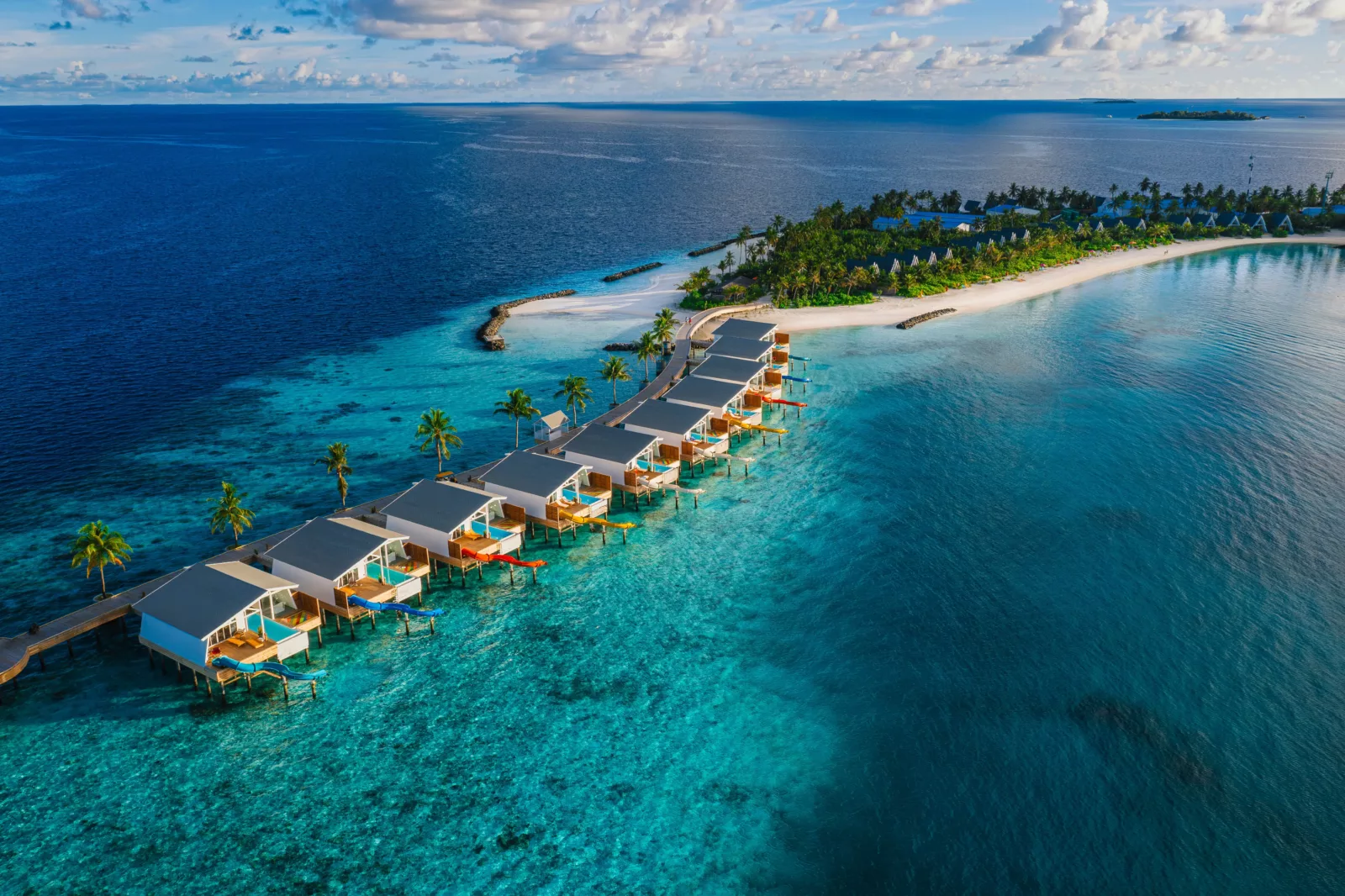
An atoll is a ring-shaped coral reef, island, or series of islets. The Maldives comprises 26 natural atolls, formed by thousands of coral islands, showcasing a rich marine biodiversity. This unique formation is the reason behind the incredible variety of lagoons, house reefs, and deep channels, providing distinct environments for exploration. This structure makes the islands distinct, setting the scene for breathtaking views from beachfront sunset villas or overwater bungalows.
#3 The Government Once Held an Underwater Cabinet Meeting
In 2009, to underscore the impending threat of global warming, the Maldivian government conducted the world’s first underwater cabinet meeting, demonstrating their commitment to environmental issues. This iconic event captured global attention and remains a potent symbol of the nation’s fight against climate change. It cemented the country’s reputation as a leader in environmental policy, showing the kind of pioneering activism the Maldives is known for.
#4 Some Beaches Feature Glowing Bioluminescent Sands
Bioluminescence is a spectacular, yet seasonal event in the Maldives, creating a mesmerizing spectacle on the shores at night. This natural phenomenon, which typically peaks between December and January, is caused by a type of plankton called dinoflagellates, making the water glitter as it washes ashore. Witnessing this surreal, starry night-time display is one of the most magical experiences guests hope to have during their stay.
#5 The Maldives Has a Rich History as an Ancient Trade Route
The Maldives has a deep, rich history influenced by various cultures and trade routes, evolving from a strategic trading post to a unique nation. The Maldivian locals are especially unique in their cultural practices. Visitors can explore this heritage through hands-on activities, whether embracing creativity in art workshops for relaxation or participating in local guided music sessions to understand the traditional Bodu Beru drum rhythm. The Maldives has a deep, rich history influenced by various cultures and trade routes, evolving from a strategic trading post to a unique nation. The unique cultural practices of the Maldivian people are derived from the inspiration of various cultures that converged through trade and the settlement of multiple tribes from different coastal regions of the Indian Ocean. This rich fusion is evident in their traditional music, which draws inspiration from East Africa and South Asia, and their cuisine, which blends elements from Sri Lanka and Indonesia. Visitors can explore this heritage through hands-on activities, whether embracing creativity in art workshops for relaxation or participating in local guided music sessions to understand the traditional Bodu Beru drum rhythm.
#6 The Islands are Home to a Highly Diverse Marine Ecosystem
The islands are home to a vibrant marine ecosystem, including pristine coral reefs, majestic manta rays, and over 2,000 species of fish, making it a paradise for divers and marine biologists. The coral reefs are the backbone of the Maldivian ecosystem, crucial for biodiversity and coastal protection. Guests seeking adventure can join expeditions to discover majestic manta rays, turtle nesting sites, and colorful fish that make the Maldives famous.
#7 The Nation is a Pioneer in Eco-Conscious Tourism
The Maldives is leading the way in eco-conscious tourism, with initiatives including eco-resorts and conservation projects aimed at preserving its natural beauty and biodiversity. Resorts are committed to sustainability, employing measures like coral reef restoration and responsible waste management. Learning about the importance of sustainable travel and eco-tourism not only enriches your experience but contributes directly to the conservation of this fragile paradise.
#8 The Name "Maldives" Means "Garland of Islands" in Sanskrit
The name “Maldives” comes from the Sanskrit “mālādvīpa,” (मालाद्वीप) meaning “garland of islands,” reflecting its structure as a chain of islands spread across the Indian Ocean. This poetic origin provides a beautiful context for the islands, as the delicate chain looks much like a garland scattered across the blue ocean. This deep connection to the land and the ancient Dheeva people inspired the unique design of the resort’s Odi Water Villas, adding a layer of cultural meaning to its beautiful geography.
#9 Traditional Maldivian Cuisine is Centered on Fish and Coconut
Maldivian cuisine is rich and varied, heavily influenced by its surroundings. It features staple ingredients like coconut, freshly caught fish, and starches, offering a genuine taste of the islands’ cultural heritage. At Oaga Art Resort, every meal is a journey, and every sip tells a story. We invite you to master the island's flavors by joining a hands-on Maldives cuisine cooking class, allowing you to recreate authentic dishes like Mas Huni back home.
#10 The Islands Are Known as a Paradise for Artists and Creatives
The natural beauty and cultural vibrancy of the Maldives have made it a hub for artists and creatives. Initiatives like the Oaga Art Resort foster a community inspired by its surroundings, encouraging guests to engage with local talent. This artistic drive provides a unique cultural layer that distinguishes the Maldives, showing that it is known not only for its beaches but for its rich creative spirit.
An Immersive Maldivian Journey with Oaga
The Maldives, with its blend of unique geographical details, cultural richness, and environmental consciousness, promises an unforgettable journey. For those seeking fun and fascinating facts about the Maldives in person, Oaga Art Resort provides an experience where discovery meets indulgence. Choosing our comprehensive all inclusive package ensures that your stay is not just a holiday, but an immersion into the island’s culture and art. Ready to explore the real Maldives? Check our availability now!
Related stories
Discovery
The Ultimate Guide to A Romantic Honeymoon in the Maldives
Key Takeaways The Greatest All-Inclusive Advantage: Choosing an all-inclusive plan at Oaga covers your speedboat t...
Discovery
Overwater Villa vs Beach Villa in the Maldives: Which is Best?
Key Takeaways Ocean vs. Sand: Choose a water villa for direct lagoon access via a private slide or a beach villa fo...
Discovery
The Ultimate Maldives Packing List: How to Pack for a Stress-Free Holiday
Key Takeaways Sun Protection is Vital: The Maldives sits on the equator. The sun is exceptionally strong. You need...